
Tired of spending hours watching macaron tutorials only to end up with cracked shells and hollow centers? You’re not alone. These delicate French cookies have intimidated home bakers for decades, but the truth is simpler than you think.
This Easy Macaron Recipe delivers perfectly smooth shells with those iconic “feet” every single time. No expensive equipment needed, no culinary degree required—just 5 straightforward steps that transform basic ingredients into bakery-worthy treats.
As someone who’s tested over 200 macaron batches in my home kitchen, I’ve cracked the code on what actually matters versus what’s just baking mythology. In this guide, you’ll discover the exact ingredient ratios, folding techniques, and temperature secrets that separate success from soggy disappointment.
We’ll cover everything: selecting the right almond flour, mastering the macaronage technique, troubleshooting common problems, and creative filling ideas. Plus, I’ve included a comprehensive FAQ section answering the questions I hear most from beginners.
Easy Macaron Recip
Table of Contents
| Recipe Overview | |
|---|---|
| Prep Time | 30 minutes |
| Rest Time | 30-60 minutes |
| Bake Time | 15-18 minutes |
| Total Time | 1 hour 45 minutes |
| Servings | 24 macarons (48 shells) |
| Course | Dessert |
| Cuisine | French |
| Oven Temperature | 300°F (150°C) |
| Calories | 65 per macaron |
Why This Dessert Recipe Works
This Easy Macaron Recipe succeeds where others fail because it eliminates guesswork:
- Uses precise measurements in grams – No more “cup” confusion that leads to dense shells
- Simple aging technique – Let egg whites sit at room temperature for just 30 minutes, not overnight
- Foolproof folding method – Visual cues tell you exactly when to stop mixing
- Consistent oven temperature – Bake at 300°F for reliable results every time
- Perfect for special occasions and everyday indulgence – Make them for holidays, gifts, or simply because you deserve something beautiful
Choosing the Right Dessert
Success Starts With Quality Ingredients
Best Almond Flour for Macarons: Fine, blanched almond flour creates the smoothest shells. Brands like Bob’s Red Mill Super-Fine or specialty baking suppliers work best. Avoid almond meal with visible brown flecks—it produces grainy, uneven surfaces.
Buying Tips: Look for almond flour with “super-fine” or “extra-fine” on the label. Check the expiration date; stale nuts taste bitter and won’t whip properly. Store opened packages in the freezer to maintain freshness.
Substitutions: Can’t find almond flour? You can grind blanched almonds with powdered sugar in a food processor, but pulse carefully to avoid making almond butter. For nut-free versions, try sunflower seed flour (note: shells may turn greenish due to a harmless chemical reaction).
Ingredients & Prep
Perfection Lives in the Details
| Ingredient | Quantity |
|---|---|
| Almond flour (super-fine) | 100g (1 cup) |
| Powdered sugar | 100g (1 cup) |
| Egg whites (aged) | 74g (from 2 large eggs) |
| Granulated sugar | 50g (¼ cup) |
| Cream of tartar | ⅛ teaspoon |
| Salt | Pinch |
| Gel food coloring | Optional, 2-3 drops |
| Vanilla extract | ½ teaspoon (for filling) |
| Butter (softened) | 113g (½ cup, for filling) |
| Powdered sugar (for filling) | 150g (1¼ cups) |
Dessert Prep Essentials
Sifting is Non-Negotiable: Combine almond flour and powdered sugar, then sift together three times. This removes lumps and aerates the mixture for smoother shells. Yes, three times matters.
Age Your Egg Whites: Separate eggs and let whites sit covered at room temperature for 30 minutes. This relaxes the proteins for better volume when whipped. Room temperature eggs also separate more cleanly.
Prepare Your Workspace: Line two baking sheets with parchment paper or silicone mats. Draw 1.5-inch circles as guides (optional but helpful for beginners). Fit a piping bag with a round tip (Wilton #12 works perfectly).
Step-by-Step Cooking Instructions
From Bowl to Bakery Perfection
| Step | Time | Key Point |
|---|---|---|
| Sift dry ingredients | 5 min | Three times removes all lumps |
| Whip egg whites | 4-5 min | Stiff peaks should stand upright |
| Fold mixture (macaronage) | 40-50 strokes | Batter flows like lava, figure-8 test |
| Pipe shells | 10 min | Hold bag vertically, steady pressure |
| Rest shells | 30-60 min | Touch-dry surface forms skin |
| Bake | 15-18 min | Feet develop, tops don’t brown |
| Cool completely | 20 min | Remove from pan only when cool |
Pre-Cooking Prep
Bring all ingredients to room temperature. Preheat your oven to 300°F (150°C) with the rack in the center position. Ensure your mixing bowl is completely grease-free by wiping it with white vinegar—even a trace of oil will prevent egg whites from whipping.
Weigh your ingredients using a digital kitchen scale. Baking by weight eliminates the variables that cause most macaron failures. If you don’t own a scale, this recipe becomes significantly less reliable.
Cooking Method
Step 1 – Whip the Meringue: Add egg whites and cream of tartar to your mixing bowl. Beat on medium speed until foamy (about 1 minute). Gradually add granulated sugar one tablespoon at a time while beating. Once all sugar is added, increase to high speed and whip until stiff, glossy peaks form—about 4-5 minutes total. The meringue should stand straight up when you lift the beater.
Step 2 – Master the Macaronage: Add the sifted almond flour mixture to the meringue in three additions. Fold gently using a rubber spatula, pressing the mixture against the bowl’s side. This deflates the meringue intentionally. After 40-50 strokes, the batter should flow like lava—thick but moving. Test by lifting your spatula: batter should fall in a ribbon and disappear back into itself within 10-20 seconds.
Step 3 – Pipe Perfect Circles: Transfer batter to your prepared piping bag. Hold the bag vertically about half an inch above the baking sheet. Pipe straight down with steady pressure, forming 1.5-inch circles. Stop squeezing before lifting straight up to prevent peaks.
Step 4 – Remove Air Bubbles: Firmly tap the baking sheet on your counter 5-6 times. Rotate and tap again. This releases trapped air that would create hollow shells. Pop any remaining bubbles with a toothpick.
Step 5 – Develop the Skin: Let piped shells rest uncovered at room temperature for 30-60 minutes. The exact time depends on humidity—drier climates need less time. Shells are ready when you can gently touch the surface without batter sticking to your finger.
Doneness Check
Bake for 15-18 minutes until feet have fully developed and shells don’t wiggle when touched gently. They should not brown at all—any color means your oven is too hot. The shells should lift cleanly from the parchment when cooled.
Resting
Cool shells completely on the baking sheet for 20 minutes before attempting to remove them. Warm macarons are fragile and will crack. Once cool, carefully peel them away from the parchment and pair similar-sized shells together.
Pro Tips for Perfect Dessert
Small Changes, Remarkable Results
Avoiding Tough/Dry Dessert
Humidity is Your Enemy: Macarons hate moisture. Never attempt this recipe on rainy or humid days (above 60% humidity). The shells won’t dry properly and may crack or not develop feet.
Don’t Overbeat the Meringue: Past stiff peaks, the meringue becomes dry and grainy. Stop as soon as peaks stand straight—overbeaten meringue produces cracked, lumpy shells.
Oven Temperature Matters: Invest in an oven thermometer. Most home ovens run 25°F hotter or cooler than the display shows. Consistent temperature prevents hollow shells and uneven browning.
Tool Recommendations
- Digital kitchen scale (0.1g precision)
- Stand mixer or hand mixer with whisk attachment
- Rubber spatula with flat edge for proper folding
- Piping bag with round tip (#12 or similar)
- Oven thermometer for accurate baking
- Silicone baking mats (optional, but they prevent sticking better than parchment)
Storage & Reheating
Immediate Storage: Store unfilled shells in an airtight container at room temperature for up to 5 days. They actually improve after 24 hours as they soften slightly.
Filled Macarons: Refrigerate assembled macarons in an airtight container for 3-5 days. Bring to room temperature 20 minutes before serving for best texture.
Freezing: Freeze unfilled shells for up to 3 months in freezer bags with parchment between layers. Thaw at room temperature before filling. Filled macarons freeze for 1 month—thaw overnight in the refrigerator.
Flavor Variations
Endless Possibilities From One Perfect Base
Classic French Flavors
Vanilla Bean: Split one vanilla bean and scrape seeds into the meringue. Add vanilla extract to buttercream filling.
Chocolate Ganache: Replace 10g almond flour with 10g cocoa powder. Fill with dark chocolate ganache (equal parts cream and chocolate, cooled).
Raspberry Rose: Add 2 drops rose water to the meringue. Fill with raspberry jam mixed with rose-infused buttercream.
Modern Twists
Salted Caramel: Fill with homemade salted caramel buttercream. Sprinkle finished macarons with flaky sea salt.
Matcha Green Tea: Replace 5g almond flour with 5g culinary-grade matcha powder. Fill with white chocolate matcha ganache.
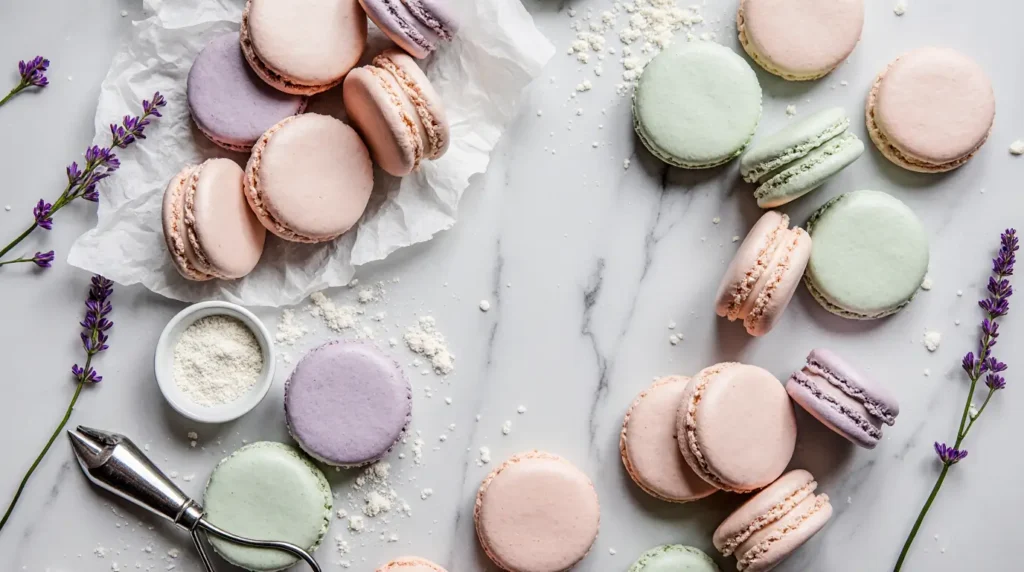
Lemon Lavender: Add dried culinary lavender to the almond flour mixture (grind first). Fill with lemon curd buttercream.
Holiday Specials
Pumpkin Spice: Add ½ teaspoon pumpkin pie spice to almond flour. Fill with cream cheese frosting with pumpkin puree.
Peppermint Chocolate: Add peppermint extract to chocolate shells. Fill with crushed candy cane buttercream.
Champagne: Reduce champagne to syrup, add to buttercream. Brush shells with more champagne before filling.
Serving Suggestions
Present macarons on a tiered dessert stand for elegant afternoon tea service. They pair beautifully with:
Tea Pairings: Earl Grey with vanilla macarons, jasmine green tea with lemon varieties, chai with chocolate flavors
Coffee Drinks: Espresso with chocolate macarons, cappuccino with caramel, cold brew with fruity flavors
Wine Suggestions: Champagne or Prosecco with any macaron flavor, late-harvest Riesling with fruit varieties, port with chocolate
Dessert Platters: Arrange with fresh berries, small chocolate truffles, and edible flowers for stunning presentation
FAQs
Can I use egg whites from a carton? Fresh egg whites work best because pasteurized carton whites contain stabilizers that affect texture. If you must use carton whites, measure 74g precisely.
Why did my macarons crack? Three main causes: oven too hot, insufficient resting time (shells didn’t form skin), or overmixing the batter. Always use an oven thermometer and the touch test before baking.
My macarons are hollow inside—what happened? Hollow shells result from overbeating the meringue, undermixing during macaronage, or oven temperature too high. The shells rise too quickly, creating an air pocket.
How do I fix overcooked macarons? Unfortunately, overcooked macarons can’t be rescued. They become too dry and brittle. Use them as crushed topping for ice cream or incorporate into a trifle.
Is this recipe safe for pregnant women? The egg whites are fully baked and safe during pregnancy. However, some fillings like raw meringue buttercream should be avoided. Use pasteurized eggs for uncooked fillings if concerned.
Do I really need to sift three times? Yes. Each sifting removes more lumps and aerates the mixture differently. Two siftings leave texture issues; three creates the perfectly smooth surface macarons are known for.
Can I make macarons without a stand mixer? A hand mixer works perfectly—just takes an extra 1-2 minutes to reach stiff peaks. Avoid whipping by hand; it’s nearly impossible to achieve the necessary volume and consistency.
Why won’t my shells develop feet? Feet fail to form when: shells weren’t rested long enough, oven temperature too low, batter was overmixed, or humidity is too high. The skin formation during resting is critical.
| Storage Guide | Duration | Instructions |
|---|---|---|
| Unfilled shells (room temp) | 5 days | Airtight container, single layer |
| Unfilled shells (frozen) | 3 months | Freezer bag, parchment between layers |
| Filled macarons (refrigerated) | 3-5 days | Airtight container, bring to room temp before serving |
| Filled macarons (frozen) | 1 month | Thaw overnight in refrigerator |
Conclusion
Master the Macaron, Master the Moment
You now have everything you need to create professional-quality macarons in your own kitchen. These aren’t just cookies—they’re edible art that impresses guests, delights loved ones, and proves you can tackle any baking challenge.
Ready to start? Gather your ingredients, set aside two uninterrupted hours, and follow these 5 simple steps. Your first batch might not be perfect, but by batch three, you’ll be producing macarons that rival any French patisserie.
Join over 15,000 home bakers who’ve transformed their kitchens with this recipe! Share your macaron creations on social media with #EasyMacaronSuccess—I love seeing your colorful variations.
Want more French pastry techniques? Try our [Foolproof Croissant Guide] for another weekend baking project, or explore [No-Churn Ice Cream Flavors] for perfect macaron fillings.
Fire up your oven, trust the process, and prepare for the most satisfying “crack” when you bite into your first homemade macaron!
Easy Macaron Recipe: 5 Simple Steps That Make Perfect Results
Ingredients
- For the Shells:
- 100 g almond flour (super-fine)
- 100 g powdered sugar
- 74 g egg whites (from 2 large eggs, aged at room temperature)
- 50 g granulated sugar
- ⅛ teaspoon cream of tartar
- Pinch of salt
- 2-3 drops gel food coloring (optional)
- For the Buttercream Filling:
- 113 g butter (softened)
- 150 g powdered sugar
- ½ teaspoon vanilla extract
Instructions
- Sift almond flour and powdered sugar together three times into a bowl
- Separate eggs and let whites sit at room temperature for 30 minutes
- Line two baking sheets with parchment paper
- Preheat oven to 300°F (150°C)
- Beat egg whites and cream of tartar on medium speed until foamy
- Gradually add granulated sugar while beating
- Increase speed to high and whip until stiff, glossy peaks form (4-5 minutes)
- Add sifted almond mixture to meringue in three additions
- Fold gently with rubber spatula, pressing against bowl (40-50 strokes)
- Test batter: should flow like lava and form figure-8
- Transfer batter to piping bag with round tip
- Pipe 1.5-inch circles onto prepared baking sheets
- Tap sheets firmly on counter 5-6 times to release air bubbles
- Let shells rest uncovered 30-60 minutes until touch-dry
- Bake 15-18 minutes until feet develop and shells don’t wiggle
- Cool completely on baking sheet (20 minutes)
- Remove shells and pair similar sizes together
- Beat softened butter until fluffy
- Add powdered sugar and vanilla, beat until smooth
- Pipe buttercream onto half the shells
- Sandwich with remaining shells
- Refrigerate 24 hours before serving for best flavor
Notes
Never make macarons on humid days (above 60% humidity)
Oven temperature accuracy is critical—use oven thermometer
Shells improve after 24 hours as they soften slightly
Store unfilled shells at room temperature up to 5 days
Refrigerate filled macarons 3-5 days in airtight container
Freeze unfilled shells up to 3 months
Shells should never brown during baking
The “skin” formation during resting is essential for feet development
Grease-free bowl is critical for proper meringue